This article is part of ISN's continuing education series for our valued customers.
The jewelry of the late 1930s and 1940s, known as Art Retro, was characterized by a shift away from the geometric aesthetic of Art Deco. Technical innovations such as Van Cleef & Arpels' invisible setting technique allowed for intricate designs with a lightweight feel, and convertible jewelry, such as necklaces that could be transformed into bracelets or earrings, was also popular. The onset of World War II disrupted the jewelry industry, leading to the use of synthetic and faux gemstones and lower karat gold alloys. Gold was manipulated in various ways and design techniques such as resilla, cannetille, and filigree were used to create intricate and textured pieces. Colored gemstones were more widely available, while diamonds, rubies, and sapphires of any significant size were scarce. Enamels were used to accentuate or even replace gems with a painterly effect.
During the war, the supply of gemstones from countries such as South Africa, India, and Burma was disrupted, leading to the use of synthetic and faux gemstones in new jewelry designs. Colored gemstones such as citrine, amethyst, aquamarine, and topaz were more widely available, while diamonds, rubies, and sapphires of any significant size were scarce. To make up for the lack of large gemstones, jewelers used small diamonds in pavé and invisible setting techniques to create the illusion of a larger piece. Colored gemstones were also combined to create graduated color changes across a piece of jewelry, and enamels were used to accentuate or even replace gems with a painterly effect. Pre-war jewelry often paired colored stones with diamonds, but during the war, combinations of colored stones without diamonds became more common. Boucheron, for example, created a series of floral necklaces using transparent enamel to highlight the design.
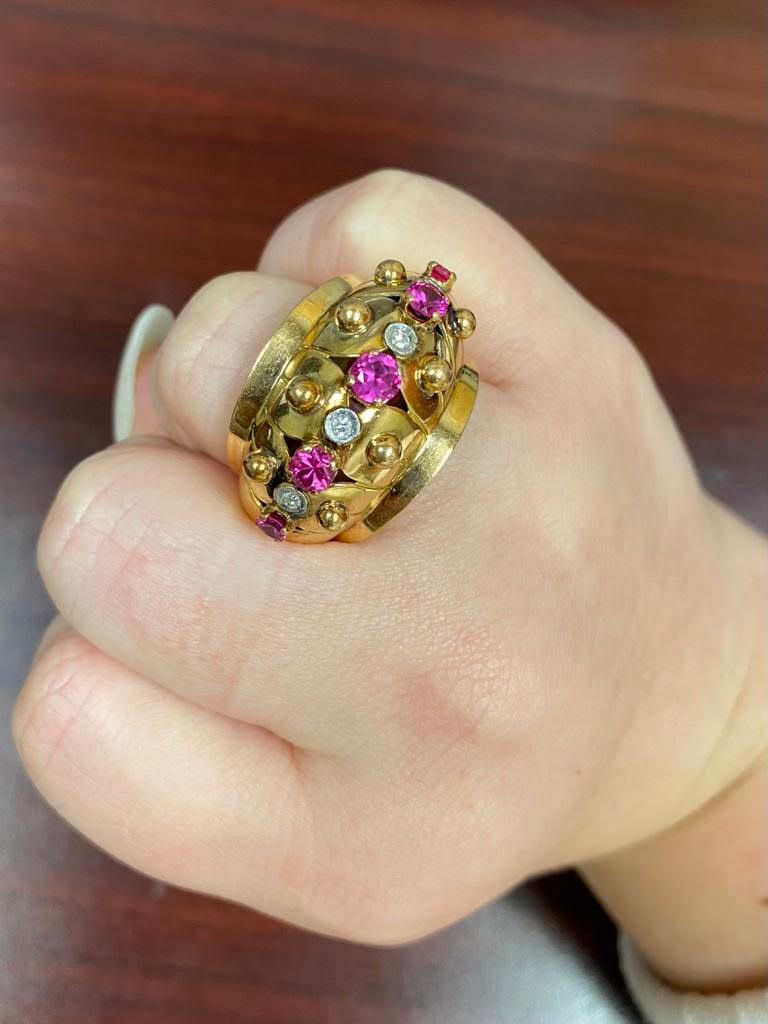
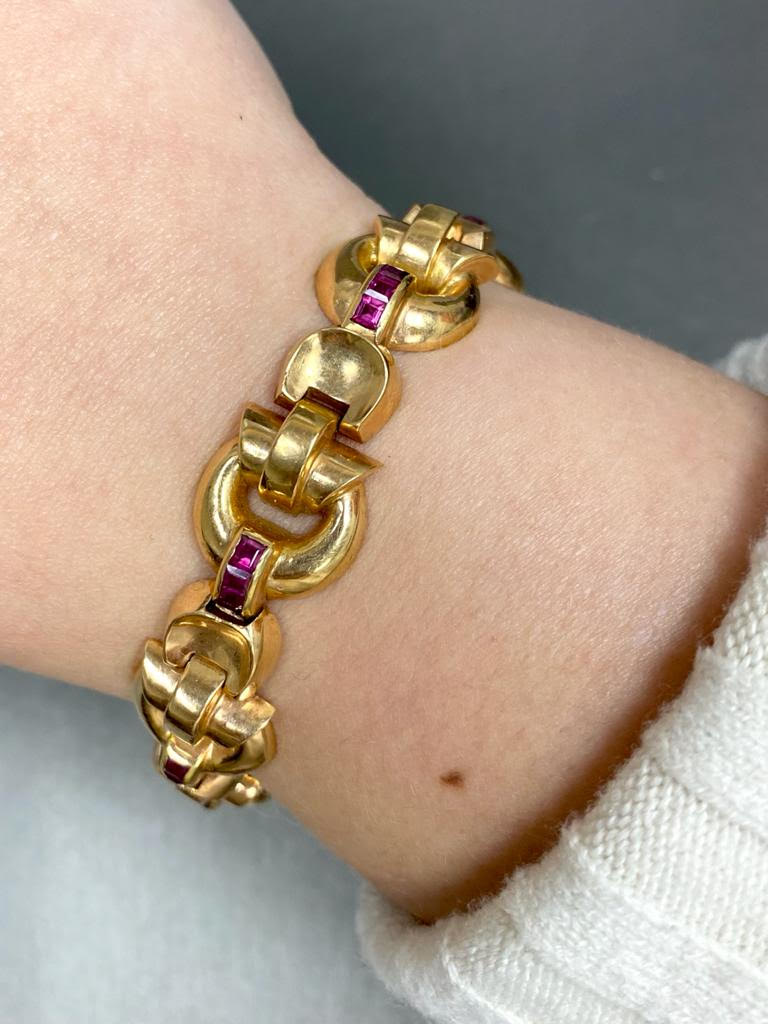
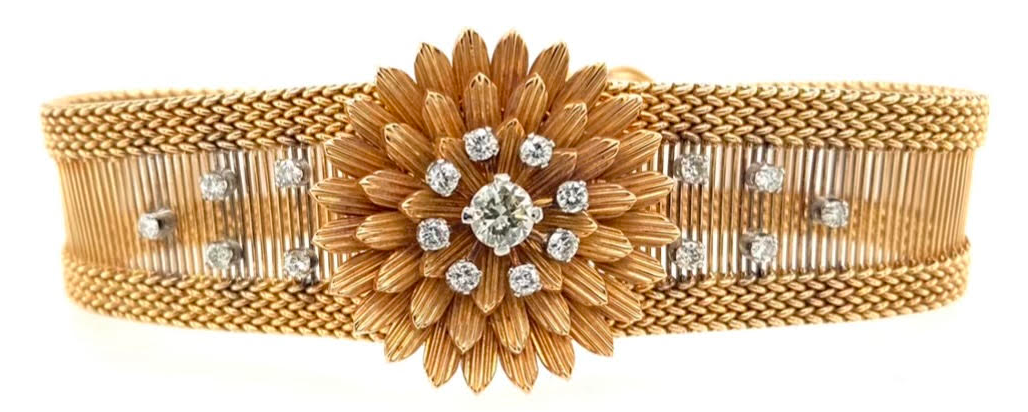
Also precious metals, especially platinum, were scarce, and the use of platinum was often prohibited. As a result, palladium was sometimes used as a substitute, and lower karat gold alloys with higher copper percentages were employed to stretch the available gold supply. This led to gold jewelry with a distinctive reddish hue. Gold was also manipulated in various ways, such as being woven, braided, or coiled, and design techniques such as resilla, cannetille, and filigree were used to create intricate and textured pieces. The use of gold became particularly prevalent in the 1940s and 1950s.
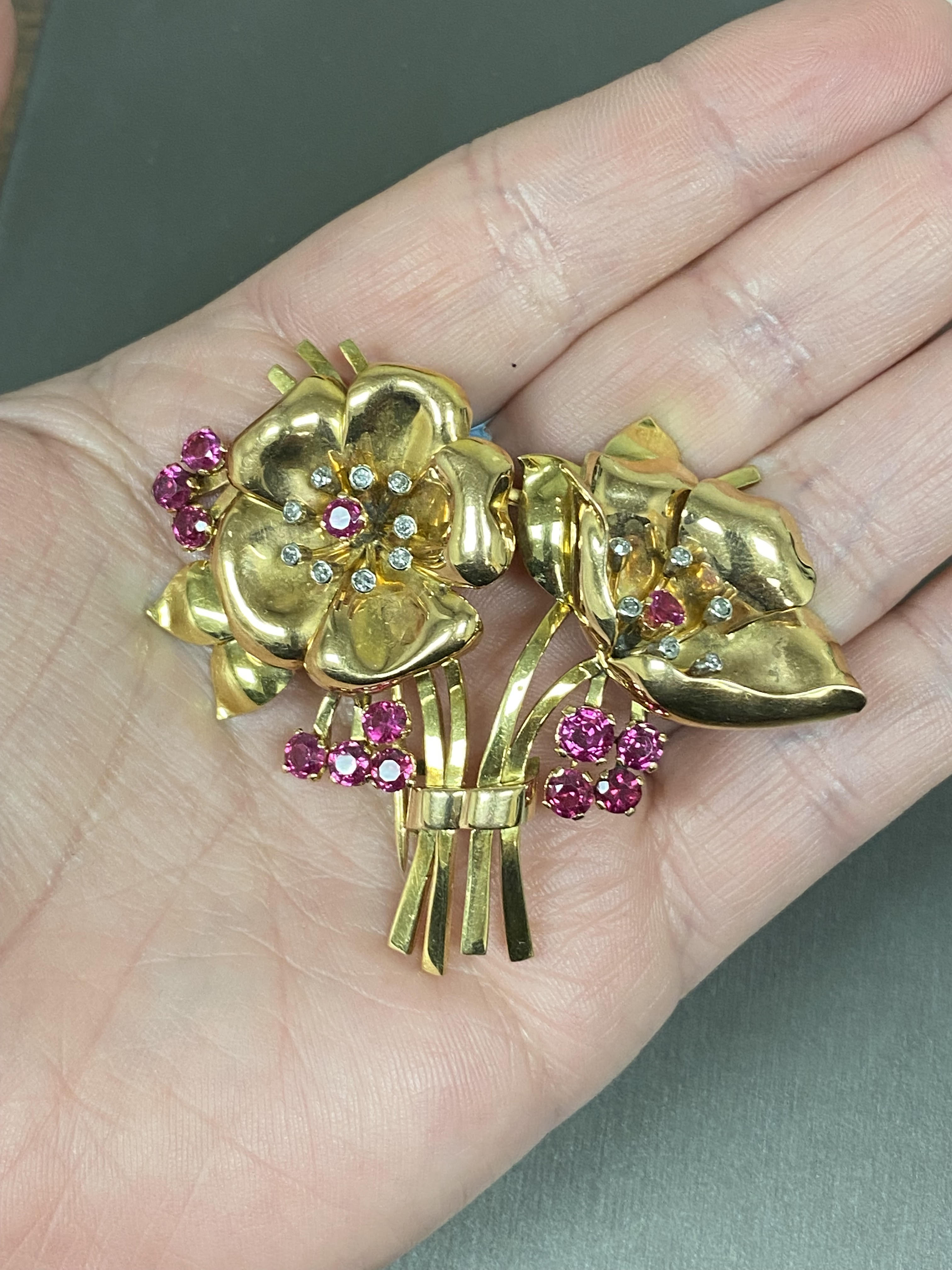
During the 1940s and 1950s, animal-themed jewelry, particularly pieces featuring jungle cats such as lions, tigers, and panthers, was popular. Big and bold designs were fashionable for rings, including bombé or boule rings pave-set with colored gemstones and rings featuring large flowerheads or citrines and aquamarines. Scrolls, volutes, fans, and ribbons were also incorporated into ring designs. Gemstones of bright colors were set using a variety of techniques, and multiple shades of gold were often used in the same piece to create multi-hued designs.